
Theologising About Music in Worship

Andrew Judd
In many church circles, ‘worship’ is synonymous with music: worship pastors wield guitars; worship time is when you dim the lights and power up the amplifiers. But this link between devotion to God and music (particularly instrumental music) is by no means obvious. Last month a friendly Imam from southwest Sydney offered to take me around his Mosque. He pointed out that our worship had much in common: prayer, exposition of scripture, ethical teaching and fellowship. But no music. I heard of a Christian convert to Islam whose first question was ‘where is the organ?’ They just laughed.
Christian worship has always been musical – yet Christians have seldom agreed on why. This article will survey the development of worship music theology by examining four influential thinkers: Augustine, Martin Luther, John Wesley and Darlene Zschech. We will see that Christians have not simply developed their theologies of music in worship by grappling with scripture: they have often been reactive, defining themselves against the practices of groups they oppose. This has shaped their vision of music in worship, and not always constructively. Christians today from all traditions must evaluate and respond to the marketplace of worship theologies on offer; these examples from history are helpful in that task.
Early church
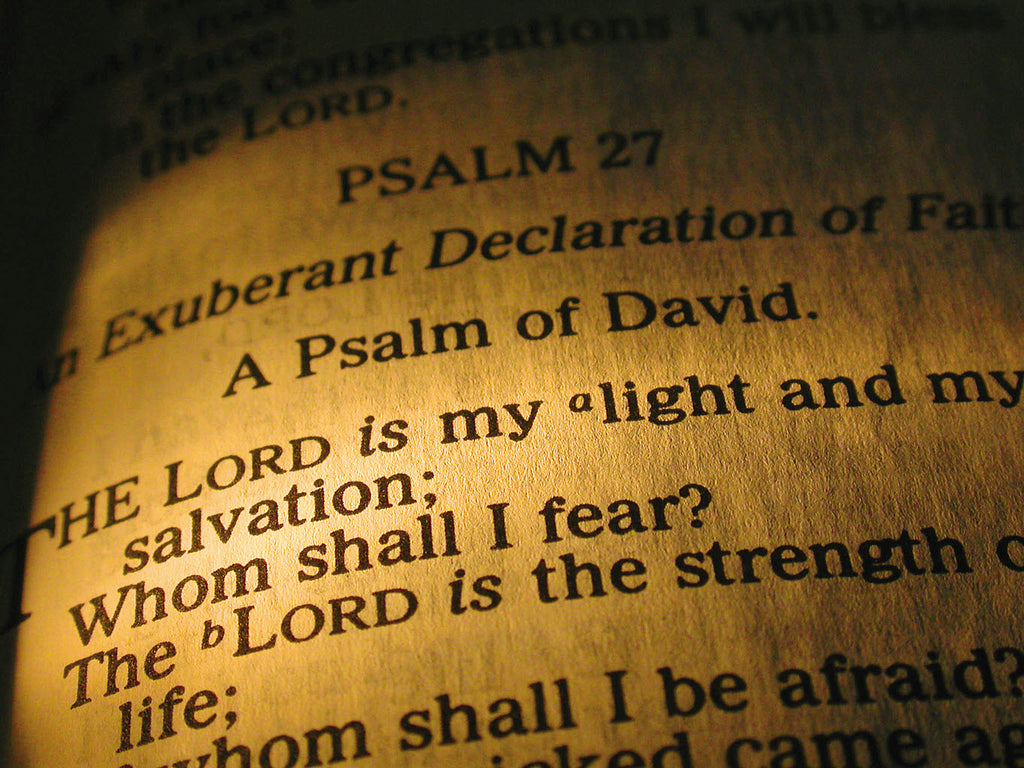
From Judaism the first Christians inherited a singing culture.[1] From the outset their God was very specific about how adherents should worship him: no drawings, no sculptures and no carvings. But they certainly could sing about him. When representing his glory, God prefers psalm to painting. So God’s people have always sung. When God’s mighty arm drew Israel out of Egypt, this nation-building act was answered by Miriam and Moses in songs of praise (Exodus 15). Later, as God laid down plans for temple worship, he made provisions for full time worship pastors: temple musicians from the tribe of Levi (2 Chronicles 5:12-13).
We know little about how this music sounded, but it probably involved some instruments, and by David’s time production values were high – Psalm 33, for example, enjoins skilful lyre playing. The Psalms’ subtle images and delicate parallelisms offer glimpses at the artistry of Israelite worship.[2]
The early church continued singing: Paul and Silas sang in their Philippian gaol cell, and Paul implies that songs featured in Corinthian gatherings (Acts 16:25; 1 Corinthians 14:26). But early on the Church distinguished its singing from Jewish temple music with the absence of musical instruments. This was partly a reflection of synagogue practices.[3] Yet it was also a deliberate reaction against surrounding pagan cultures, which for them reeked of unbridled sensuality and idolatry.[4] To guard morality and doctrine, Christian worship needed to be distinguished unambiguously from pagan practices. Clement of Alexandria (c150–c216) advised believers to ‘no longer employ the ancient psaltery, trumpet, timbrel, or flute’, which ‘inflame desire, stir up lust, or arouse anger’ (he did, on King David’s account, allow the cithara and lyre at agape meals).[5] John Chrysostom (347-407) dismissed the musical instruments in the Psalms as, like cultic sacrifice, an accommodation to Israel’s ‘dull temperament’.[6] Christian worship music, for Chrysostom at least, would not involve individual instrumentalists, but a body of ‘living strings’ bound by the Spirit:
Our tongues are the chords of the cithara which come forth as a diverse sound yet form a divine harmony. Women, men, the aged, youth, are all certainly individual persons, but they are not individuals when they sing hymns, for the Spirit, governing the voice of each, brings about one melody in all.[7]
Reacting against an ominous cultural threat, Christian worship theology developed its own ‘sacred’ a cappella (meaning ‘in the chapel style’) music.
Augustine
Born in 354, Augustine of Hippo is a towering figure in Christian thought. He reports in his most famous work, Confessions, how prior to his conversion the music of the church deeply moved him:
I wept at your [God’s] hymns and canticles, deeply moved by the voices of your sweetly singing church. Those voices flowed into my ears, and the truth was poured out in my heart, whence a feeling of piety surged up and my tears ran down. And these things were good for me.[8]
Yet Augustine struggled to accommodate this formative experience of the emotional power of worship music within his theology. It may be that Plotinus’ neo-Platonist tradition left many Christian thinkers, like Augustine, with a dim valuation of the physical world, giving priority to reason over emotions.[9] But Augustine worried that his response to Christian worship had more to do with the music than its content:
the gratification of my flesh – to which I ought not to surrender my mind to be enervated – frequently leads me astray ... when it happens to me that the song moves me more than the thing which is sung, I confess that I have sinned blamefully and then prefer not to hear the singer.[10]
Augustine was aware that Athanasius, the great Trinitarian defender, was unenthusiastic about music’s emotional power. Athanasius reportedly thought it best if the singer only slightly inflected the words to make it closer to speaking than singing, insisting that recitation of the Psalms ‘is not done from a desire for pleasing sound, but is a manifestation of harmony among the thoughts of the soul’.[11] Athanasius thus outlawed the new style of melodic singing which appeared in the fourth to early fifth centuries, and ruled that only scripture be sung in church.
Yet something of Augustine’s first moving experience of worship music restrained him from taking Athanasius’ hard line. He admitted that there might be great benefit in the ‘fluent voice and music that is most appropriate’, though only because they might help the ‘weaker soul ... be elevated to an attitude of devotion’.[12] Music which reflected a sincere heart was allowed,[13] but only as a crutch for immature Christians.
Surveys can do little justice to the rich period following Augustine. Certainly, instruments were still mostly off limits until the end of the middle ages (some early organs notwithstanding). Likewise a general preference for scriptural texts and a suspicion of strong emotions continued through the middle ages. This bred art forms to match: the beautiful monophonic simplicity of the Gregorian chant, for instance, was designed to inspire serious spiritual contemplation. On the other hand, some writers from the period complained that increasingly complex harmony made it almost impossible to tell what language the singers were singing. Pope John XXII was concerned enough about the development of polyphonic forms to try to limit its use.[14] But this did little to curtail the exploration of polyphonic possibilities throughout the Christian world.
This increasing complexity was meant to engage the faculties in apprehending the holiness of God, and anticipate heavenly worship. Yet the professionalism needed to pull it off left dwindling room for congregational involvement. While Tertullian hints that even in the early church songs were performed by individuals,[15] for writers like Ambrose of Milan, John Chrysostom and Basil the Great, the focus of church singing had always been communal.[16] Yet by the fifth century, some congregations were merely responding to cantillated (chanted) Psalm readings with the Alleluia (a practice called ‘lector chant’); by the tenth century the ordinary mass in many places was sung entirely by a choir of trained clergy called the schola.[17]
Luther
During the Renaissance, musical sophistication only increased. Composers like Josquin des Prez (1450-1521) thought music itself carried meaning, not just the words, so lyrics and tunes needed to be matched carefully. Furthermore the relationship between secular and sacred music became ‘increasingly symbiotic’.[18] The protestant reformers thus inherited a complex musical tradition, many using music powerfully to promote their own theological positions.
But developments in protestant theologies of worship music were often reactive: like the church fathers, the reformers rejected the practices of opposing traditions in order to carve out their own unique identity. The French reformer John Calvin (1509–1564) was deeply suspicious of both the complex polyphonic music of the Catholic church, and the ‘lascivious, injurious, alluring’ secular music of the day.[19] He thus forbade anything that might obscure the meaning of the words, including harmonies and instruments. Polyphony was fine in private, but not in church.[20] But he was also wary of the inherent emotional power of music, worrying that ‘venom and corruption’ might reach ‘the depths of the heart’.[21] The best safeguard was to limit singing to scripture. Calvinist services utilised the Genevan Psalter (1551) which set readable translations of the Psalms to pure and simple melodies.[22] Even more severe was the Swiss Ulrich Zwingli. Despite being an accomplished musician himself, his belief that ‘spirit and flesh contradict each other’ meant acceptable worship must be inward, and silent: ‘not with our voices, like the Jewish singers, but with our hearts’.[23] So when Zurich’s clergy purged the city of relics and images in the summer of 1524, they incapacitated the organs as well.[24]
But for German reformer Martin Luther (1483–1546), the problem with Renaissance worship music was not its instruments, but its poor instruction. A teacher by nature, he was concerned that music should instruct his congregations, particularly youth, in good doctrine. He wrote:
For their sake [simple laymen] we must read, sing, preach, write and compose, and if it would help the matter along, I would have all the bells pealing, and all the organs playing, and let everything chime that has a clapper.[25]
Lutherans used Gregorian chant, sacred folk songs, instruments and occasionally the higher secular tunes: whatever musical vehicle would carry the truth most clearly.[26] Only the abuse of art needed to be rejected.[27] It was St Thomas's Lutheran Church in Leipzig that became home to a high water mark of the Baroque period: J. S. Bach.
Luther prized scriptural words and ideas – for him the Holy Spirit was the greatest singer and poet of praise to God – but thought it more important to express the meaning of scripture than its words. He also saw an urgent need to re-establish the communal dimension of worship singing. For Luther, the singing of praise was the means by which God becomes our God, as we confess him the giver of all we prize most. Such praise is therefore, for Luther, a profoundly corporate experience, unifying the church militant on earth with the church triumphant in heaven to praise God.[28]
Wesley
But in England, it was Calvin’s position that held sway. ‘Plain’ and ‘modest’ songs in English, with simple harmony, were mandated under both Edward VI and Elizabeth I. Thus a sober and easily understood English Psalter was provided by sixteenth century compiler Thomas Sternhold.[29]
It was the non-conformists, reacting against what they saw as stifling English worship, who gave us the great hymn writers of the eighteenth century. Isaac Watts reworked the ideas of the Psalms to provide a Christocentric interpretation.[30] Then, following him, the Wesley brothers rejected the rationed sensuality of the English Psalter. John Wesley (1703-1791) mocked the music of the English Psalter, much preferring the worship of the Methodists who:
sing praise to God ... with the spirit, and with the understanding also: not in the miserable, scandalous doggerel of Hopkins and Sternhold [i.e. the English Psalter], but in psalms and hymns which are both sense and poetry.[31]
Wesley saw no need to insist on simple harmony, approving of whatever ‘may best raise the soul to God’.[32] He also favoured communal singing over professionalism, desiring ‘well-composed and well-adapted tunes’ sung ‘all standing before God, and praising him lustily and with a good courage.’[33] His Arminianism made provoking spiritual response all the more urgent: for Wesley the goal was not simply to express emotion, but to direct it, using the power of music to cut people to the heart and bring religious revival.[34]
Reacting against the established church, these non-conformist hymn writers valued cultural relevance over tradition, emotional engagement over solemnity, and clear biblical teaching over literal words of scripture. They set the trajectory for many traditions in the nineteenth and twentieth centuries. The Victorian Church of England produced many notable hymn writers, while North American folk ‘gospel songs’ spread worldwide, often on the back of evangelistic missions. The twentieth century, however, was marked by a new crossover from secular culture. Born, it is often said, in Calvary Chapel California, the ‘Praise and Worship’ genre went international, largely propelled by Pentecostal churches.[35]
Zschech
Darlene Zschech is not a theologian, but she is a fitting figure-head for the Pentecostal music movement. Worship Pastor at Hillsong Church until 2007, she has influenced a generation of church musicians across denominations. Her church is synonymous with high production values and catchy songwriting, and their album sales make secular artists salivate. So it is interesting that in her 2002 book, Extravagant Worship, [36] Zschech talks more about lifestyle than music:
Although music is a wonderful expression of worship, it is not in itself the essence of it. The core of worship is when one’s heart and soul, and all that is within, adores and connects with the Spirit of God. (p27)
For her, ‘extravagant worship’ is a way of life exemplified by Bible characters who were reckless in their obedience and devotion to God. Worship leaders should give ‘a life to follow’, not their ‘talent’ (p159). Indeed there is much in Zschech’s theology and praxis that Wesley would approve of. She writes that worship music can ‘make the Word memorable and settle the message into our hearts’ (p196), andinsists that corporate worship is ‘not about stirring ourselves into an emotional frenzy’, but turning the congregation’s ‘eyes to the Lord’ (p169).
Yet Zschech’s theology also explicitly values excellence: ‘We are to serve God with excellence because we know an excellent God’ (p127). Like the high medievalists, she wants to ‘enter the throne room of God’ (p155) – except, this time, she is taking the whole auditorium with her. Using modern sound systems, excellent music and congregational participation may coexist.
Zschech’s drive to excellence is partly reactive – against the irrelevant church culture which she thinks has ‘kept almost an entire generation out of the house of God’ (p128). This reactive over-emphasis on excellence creates significant tensions in her theology of worship. On the one hand, she understands ‘excellent worship’ not as an objective standard, but in terms of the subjective integrity of the individual’s devotion: loving Jesus ‘more than life’, and (in music) bringing your finest ‘at whatever stage your finest is’ (p125). She stresses that we worship in a context of grace, and must not allow a ‘performance-based Christianity’ to steal our assurance of salvation (p148).
Yet she also speaks of excellence in an objective sense, linking it to God’s own excellence and comparing it to the quality craftsmanship required of Israel in constructing their temple. This objective measure of excellence sits uneasily with her ambiguity over whether worship is a response to God’s grace, or its cause:
Extravagant worship grabs God’s attention ... Throughout the stories in the Bible, whenever someone demonstrated extravagant worship, God reacted with extravagant blessing. It’s cause and effect. Extravagant worship brings extravagant results.’ (pp34-35)
Zschech’s excellent God needs excellent worship, but at the same time God accepts the offerings of very un-excellent sinners. Something crucial is missing in this theology of worship: a priest. Drawing from Hebrews 10, Zschech gets frustratingly close to resolving the tension. She points out that God has never been pleased by sacrifices or burnt offerings, concluding that ‘the only thing God wants from you is your heart’ (p46). But this short circuits the Trinitarian logic of Hebrews: the priestly ministry of Christ, in which we participate by the Spirit, is the only basis on which we can offer acceptable worship.[37] The Old Testament taught God’s people that even their righteous works were dirty rags (Isaiah 64:6); the New greets us with an incredible invitation, that ‘through Jesus’ we can ‘offer to God a sacrifice of praise—the fruit of lips that confess his name’ (Hebrews 13:15).
Christians from reformed traditions will be cautious about where this theology of worship music leads. There may indeed be a link between Hillsong’s high production values, Zschech’s inspirational jargon of ‘dream fulfilment’ (pp109, 168), and the history of prosperity gospel teaching within the Pentecostal movement. And indeed, it is entirely appropriate for different Christian traditions to develop their own nuanced theologies of the place of music in worship. Yet the temptation will be, as we have seen throughout this survey, to do so reactively.
The problem with reactive theologies
From Augustine to Zschech, theologising about worship music been dominated by a desire to distinguish our music practices from something else: for Augustine it was seductive paganism, for Luther it was highfalutin papistry, and for Wesley and Zschech it was suburban Anglicanism. A response to other ideas is necessary, but a theology forged largely as a reaction against something will have weaknesses.
First, reactive theology quickly loses touch with the truth that worship is God’s idea, not a human invention. The Old Testament repeatedly reminds Israel that worshipping God means engaging with him ‘on the terms that he proposes and in the way that he alone makes possible’.[38] Creativity is allowed – even encouraged – within those terms. Yet reactive theologies take human ideas as the starting point: the opposition’s practices set the agenda, and determine which questions are asked. Such theologies will routinely get stuck answering the wrong questions—defining acceptable worship by style, rather than whether it helps believers engage with God and edify each other—and the relative importance of many practical issues (like whether to use instruments) is exaggerated, .
Second, reactive theologies often force a wedge between two right answers. Reacting against the idea that worship is simply music, some assert that music has little to do with worship. They assume that the idea of worship as a ‘total-life orientation’ is an innovation of the New Testament writers, and one which supersedes the Old Testament devotional practices without a trace. This is inaccurate on both counts. When God taught the Israelites on Mt Sinai how he was to be worshipped, his instructions covered both ritual and lifestyle. And while the New Testament radically transforms worship to centre upon Christ, and places added stress on corporate edification in church meetings, worship music is still worship.[39]
Biblical worship of God has always implied, not one idea, but three: (1) to bow the knee in adoration, expressing submission to him and grateful recognition of who he is; (2) to serve him obediently both in specific acts and generally in life; and (3) to show reverence or respect for God in every aspect of life.[40] A theology of music in worship needs to be broad enough to cover all three: seeing music as part of worship, without equating it with worship.
Third, reactive theology routinely overcorrects the opponent’s flaws. An illustrative example is Zschech’s insistence that worship music is addressed to God. This is a reasonable response to some reformed theologies which so emphasise the teaching role of music that God seems a distant third party. But to bolster her argument she makes the inaccurate assertion that Israel’s singing was exclusively ‘to the Lord’ and ‘they never sang to each other’, implying that we should not sing to each other (p189). Actually the Old Testament is full of people praising God by ‘noticing’ how great he is, and singing about it to their fellow Israelites – even to their enemies! Paul instructs Christians to ‘sing and make music in your heart to the Lord’ as well as to ‘speak to one another with psalms, hymns and spiritual songs’ (Ephesians 5:19). As with everything in church life we need to be aware of both the ‘vertical dimension’ (by which God ministers to us and we respond), and the ‘horizontal dimension’ (as we minister to each other).
Christian worship in every tradition must respond in some way to the wide influence of Pentecostal worship music. Judging from history, many people’s first instincts will be reactive: to define themselves by who they are not. The better approaches, however, will evaluate their own inherited tradition in light of scripture, accept what is good in other practices, and marshal whatever musical resources their culture can offer to realise a full biblical vision of music in Christian worship.
Andrew Judd writes and plays for worship music band Garage Hymnal, and studies at Moore Theological College in Sydney.
NOTES
[1] Paul Bradshaw, The Search for the Origins of Christian Worship: Sources and Methods for the Study of Early Liturgy (2nd ed.; London: SPCK, 2002), p39.
[2] See Robert Alter, The Art of Biblical Poetry (New York: Basic Books, 1985).
[3] See James McKinnon, ‘The Meaning of Patristic Polemic Against Musical Instruments’, in Studies in Early Christianity (ed. Everett Ferguson; New York: Garland, 1993), p291; Jeremy Begbie, Resounding Truth: Christian Wisdom in the World of Music (Grand Rapids: Baker Academic, 2007), p72.
[4] Johannes Quasten, Music and Worship in Pagan and Christian Antiquity (Washington D.C.: National Association of Pastoral Musicians, 1983), p60; Eric Werner, ‘Notes on the Attitude of the Early Church Fathers Towards Hebrew Psalmody’, in Studies in Early Christianity (ed. Everett Ferguson; New York: Garland, 1993), p345.
[5] Clement of Alexander, ‘The Tutor of Children’, in Lawrence Johnson, Worship in the Early Church: An Anthology of Historical Sources (Minnesota: Liturgical Press, 2009), para 832; Quasten, Music and Worship in Pagan and Christian Antiquity, p73.
[6] John Chrysostom, ‘On Psalm 149’, in Johnson, op. cit., para 1470. Likewise Nicetas of Remesiana, ‘On The Usefulness of Psalmody’, para 3197.
[7] Chrysostom, ‘On Psalm 145’, in Johnson, op. cit., para 1469.
[8] Augustine, Confessiones IX, vi, 14 in James McKinnon, Music in Early Christian Literature (Cambridge: Cambridge University Press, 1989).
[9] Everett Ferguson, Backgrounds of Early Christianity (3rd ed.; Grand Rapids: Eerdmans, 2003), p392.
[10] Augustine, op. cit., X, xxxiii, 49-50.
[11] Athanasius, Epistula ad Marcellinum 29, PG XXVII, 40-1 and Augustine, op. cit., X, xxxiii, 49-50; William T. Flynn, ‘Liturgical Music’, in The Oxford History of Christian Worship (ed. Geoffrey Wainwright; Oxford: Oxford University Press, 2006), p775.
[12] Augustine, op. cit., X, xxxiii, 49-50.
[13] Augustine, ‘Rule of Saint Augustine’, II.3 in Johnson, op. cit., para 2599.
[14] Mark Evans, Open Up the Doors: Music in the Modern Church (London: Equinox, 2006), pp27-28.
[15] Flynn, op. cit., p770.
[16] Chrysostom, ‘On Psalm 145’ at para 1469; Ambrose of Milan ‘Commentaries on the Twelve Psalms of David’ at para 1158, and Basil the Great, ‘Homily on Psalm 1’ at para 1346, both in Johnson, op. cit.
[17] Flynn, op. cit., pp771-3.
[18] Evans, op. cit., p29.
[19] Charles Garside, The Origins of Calvin's Theology of Music: 1536–1543 (Philadelphia: American Philosophical Society, 1979), p28.
[20] Flynn, op. cit., p782.
[21] Paul Westermeyer, Te Deum: The Church and Music (Minneapolis: Fortress, 1998), p156.
[22] Evans, op. cit., p31.
[23] Ulrich Zwingli, ‘Conclusion 45’ cited in Charles Garside, Zwingli and the Arts (New Haven: Yale, 1966), p45; Westermeyer, op. cit., p151.
[24] Westermeyer, op. cit., p150.
[25] Flynn, op. cit., p780.
[26] Westermeyer, op. cit., p148.
[27] Vajta, op. cit., p187.
[28] Ibid., pp156, 15, 161.
[29] Evans, op. cit., pp31-32.
[30] Flynn, op. cit., p784.
[31] John Wesley, ‘To A Friend, On Public Worship’, in The Works of the Rev John Wesley: Tracts and Letters on Various Subjects (1st ed.; New York: J & J Harper, 1827), p233.
[32] Ibid.
[33] Ibid.
[34] Evans, op. cit., p34. For an excellent modern discussion on emotion in music see Begbie, op. cit., p302.
[35] Evans, op. cit., pp37-39.
[36] Darlene Zschech, Extravagant Worship (Minneapolis: Bethany House, 2002).
[37] See generally James Torrance, Worship, Community, and the Triune God of Grace (Carlisle: Paternoster, 1996), p49; on Hebrews specifically see David Peterson, Engaging with God: A Biblical Theology of Worship (Leicester: Apollos, 1992), pp228-254.
[38] Peterson, op. cit., p20.
[39] D. A. Carson, ‘Worship Under the Word’, in Worship by the Book (ed. D. A. Carson; Grand Rapids: Zondervan, 2002), p25.
[40] Peterson, op. cit., pp72-74.
Leave a comment
Comments will be approved before showing up.
Also in CASE Online Library


Sign up to get the latest on sales, new releases and more …
© 2026 CASE.
Designed by Out of the Sandbox.
Powered by Shopify


