
A Day’s March Nearer Home

James Montgomery’s famous hymn Forever with the Lord has probably been sung at countless Christian funerals. People of my generation have sung these memorable lines on many occasions:
‘Forever with the Lord!’
Amen, so let it be!
Life from His death is in that word
’Tis immortality.
Here in the body pent,
Absent from Him I roam,
Yet nightly pitch my moving tent
A day’s march nearer home.[1]
Christians often speak of a believer who has died as having ‘gone home to be with the Lord’. Behind these sentiments, which we have probably never really questioned, are at least two assumptions that have solid biblical and theological underpinnings: first, in this life things are not what they ought to be because we live in a fallen world; and second, the promise of the Christian gospel is that at some time in the future, things will be what they ought to be in the redeemed and renewed world. It is this fact of a future hope which encourages the facile assessment that Christianity is about ‘pie in the sky when you die’.
In the meantime we may well ask why is there no place like home? After her adventures in Oz, Dorothy wakes up in the Kansas farmhouse and exclaims ‘Oh, Auntie Em, there’s no place like home’. We could mention a number of popular and quite secular songs that extol the qualities and virtues of home. ‘Show me the way to go home’ and ‘I still call Australia home’ are a couple that spring to mind. One golden oldie longs for a home on the range amongst the buffalo where the deer and antelope play! Everybody says nice encouraging things and it never rains! Many a struggling rancher or cattle farmer must have had a good, cynical laugh at that one.
Notwithstanding the sentimental and the plainly loopy, we do have a real sense of home, so much so that homelessness is rightly seen as a social ill that must be constantly addressed. The crime of home invasion is perceived as a violation of the place where people should be able to feel safe. Ideally, even in secular terms, home is where we belong. Home is where we are secure and where there is an orderliness to existence that is perceived as proper. Home is where the most enduring personal relationships are nurtured and love is a meaningful word. Home is where we find rest from our toil and security for the family. Home is where we want to be because there we can be ourselves surrounded by the people and things that give us a sense of our identity. Many young people leave ‘home’ because it no longer functions as a home should.

So what biblical bases are there for the kind of things we associate with home and what, if any, are the ways that Christians need to understand the concept of home that gels with the central truths of the gospel of Jesus Christ? The prototypical home in the biblical narrative is the Garden of Eden. There is no talk of a shelter of any kind in Eden; apparently there is no need. There is only God’s people in the place he made for them and living according to the structures ordained by the Creator. These structures include people’s relationship with the rest of the creation and fellowship with God himself. Once this situation comes to an end because of human rebellion against God’s established order, there is the continual sense of reaching towards a goal that, if not unattainable, is certainly well off the map.
Most people have a sense of going on a journey in life even if it never takes them away from the family farm. They grow up and grow old eventually to die. While some are convinced that death is the end and oblivion is the final state, others suspect or hope death isn’t the end. Or they echo Hamlet’s concern: ‘to sleep, perchance to dream’. But, the Christian conviction is summed up in the words of the Creed, ‘I look for the resurrection of the dead and the life of the world to come’. This leaves us with the sense that there is a final arriving at a home that is the resolution of all problems and suffering. We say those words in the creed with the sense that, when we get there, there will be nowhere else to go, and nowhere else we would want to go. The biblical basis for this conviction is the all-pervasive sense of going somewhere, to the goal most to be desired. The biblical metanarrative provides us with a redemptive history that deals with the homelessness brought about by the rebellion of Adam and Eve. At the heart of the judgment of God is the final sanction: ‘In the day that you eat of it you shall surely die’. This death is not a going home to be with the Lord, but the very opposite. The judgments that follow the rebellion of Adam and Eve demonstrate dislocations and corruption that characterize the human existence more familiar to us in our world, but completely at variance with the briefly described situation of Eden in the creation that God saw was ‘very good’. God’s Sabbath rest (Gen 2:1-3) indicates the perfection of the untainted creation. If Eden is the paradigm of home, outside Eden, in our present world, the human race is homeless.
In a fallen world there can be no real home-coming unless there is redemption. The damage has been done and only a sovereign and gracious God can repair it. No matter how diligently we build our homes without God, at best they are imperfect and often chaotic. They are certainly not, in any real sense, permanent. They are constantly in flux: children are born, grow up, leave, and death is always waiting in the wings. The good things are at best transitory. Home, then, must be defined by God, and its attainment must be directed and enabled by God. Some of the characteristics of home are discernible in the way God deals with people by grace. Cain kills his brother Abel and is banished into the land of Nod—which means wandering (Gen 4:8-16). He has no home and is vulnerable. While God still provides him some protection, Cain seeks his own safety in city-building (Gen 4:17). The grace that Noah found in God’s eyes (Gen 6:8) is the undeserved gift of safety and deliverance from judgment. Furthermore the family unit that is saved in the ark continues to figure in the dispensation of mercy and justice after the flood. One descendant of Noah is Abraham, whom God called from a pagan culture and promised a family unit that will know God’s provision, including that of a homeland (Gen 12:1-3). This family will one day extend well beyond the bounds of Abraham’s natural descendants to include other nations (Gen 17:1-8).
The Eden paradigm keeps re-emerging in the biblical narrative in a way that confirms its significance. Yet it exists within a tension that presents a constant challenge to its reality. Abraham’s descendants become slaves in a foreign land that is not ‘home’. The Exodus has the promise of entering the Promised Land, a land flowing with milk and honey, where the people can live as God’s people and know his presence with them. The struggle of the nation of Israel to make the land their home is documented in the Former Prophets (Joshua, Judges, Samuel and Kings). The climax of the process is the building of national identity around Jerusalem, the temple, and the Davidic kingship. The glory is short-lived and the two books of Kings detail the decline from the magnificence of Solomon’s kingdom to final destruction and exile. But, as always, the homelessness of God’s people is a self-inflicted homelessness.
In the face of the desolation of Israel’s home, the prophets promise a return of a faithful remnant to a restored homeland. In the prophets, the paradigm of Eden is referred to as the future that the faithful can confidently expect (Isa 41:18-19; 51:3; Ezek 36:35; 47:1-12). The people of God will be redeemed, to return from the places to which they have been driven, and they will dwell in the land with God in their midst (Jer 23:3-8; 29:10-14; Ezek 36:24-28). The period of reconstruction after the return from the Babylonian exile (see Ezra, Nehemiah), saw the gradual rebuilding of the external structures of the city and temple. But the reality was far removed from the glories of the prophetic promises, and the Old Testament period comes to an end without the return to the Edenic bliss longed for.

When we come to the Gospels the situation, if anything, has become worse. Reconstruction under the Persians had come to an end with the incursion of Alexander the Great and Hellenism into Asia. The inter-testamental period under the Greeks is one of persecution of the Jews and great suffering—which is hardly relieved by the coming of the rule of the Romans. If the people of God are in any sense ‘home’, they have nevertheless suffered a series of violent home invasions. To this situation comes Jesus of Nazareth. He and his apostles declare a radically different approach to the longing for a home. It is not that they turn their back on the aspirations that go all the way back to Eden. But they redefine the locus of home and in so doing point in a different direction to the longings of most Jews of the time. Home is not reached by the removal of the home-invaders, for that situation will only become worse. Jesus sees only destruction of the treasured fabric of home in the future (Matt 24; Mk 13). But there is a new way to understand home that he brings.
At home with Jesus
The underlying dynamic to this new look is the role Jesus claims as fulfiller. Central to his fulfilling role is that he takes the burden of homelessness upon himself in the most radical way. ‘Foxes have holes, and birds of the air have nests, but the Son of Man has nowhere to lay his head’ (Matt 8:20). Yet he can promise what he at this stage must himself forego: ‘Come to me all who labor and are heavy laden, and I will give you rest’ (Matt 11:28). He assures his disciples: ‘In my Father’s house are many rooms. If it were not so, would I have told you that I go to prepare a place for you? And if I go and prepare a place for you, I will come again and will take you to myself, that where I am you may be also.’ (Jn 14:1-3) The Gospels make little of Jesus’ earthly dwelling place and concentrate on his journey that constantly brings him into conflict with the popular notions of the Jews and the teachings of their leaders. Eventually this leads to the violence of Calvary and his cry of desolation; ‘My God, my God, why have you forsaken me?’ (Matt 27:46). This is the ultimate definition of homelessness: to be forsaken by God. Home, then, is to be accepted by God and, as the Shorter Catechism puts it, to enjoy him forever. The confusion of the disciples over the death of Jesus is addressed by the risen Christ putting it all into the context of the Old Testament Scriptures, as recorded in Luke 24:25-27, 44-47.
As the fulfiller, Jesus is declared to be the locus of all the promises of God made to Israel (Acts 2:30-33; 4:27-28; 13:32-33; 2 Cor 1:20). We can focus on various aspects of Jesus as fulfiller to reveal the locus of home. First, Jesus is the incarnation of God the Creator, who is One. Taking the paradigm of Eden as our guide we see that any talk of home for us who are created in the image of God must involve Jesus the God-man. Second, Jesus is the truly human son of Adam (see Lk 3:23-38). Not only is he human, but he is the representative human, the true Adam and the faithful Israel. There is no real home without him. He is Immanuel, God with us. The God-man relationship, dislocated in the Fall, is here immutably re-established. Third, Jesus is the focal point of the place where God dwells with his people. He is the real tabernacle (Jn 1:14, ‘And the Word became flesh and dwelt—Gk: tabernacled—among us’) and the new temple (Jn 2:19, ‘Destroy this temple, and in three days I will raise it up’). These together establish the only real home for us humans. Away from God and his Christ we are essentially homeless.
Home in the city
To have any lasting meaning, home must be intrinsically permanent. That is why there is no final rest in man-made homes without God. Cain’s city anticipates the destruction in Noah’s time, and the godlessness that persisted after the flood leads to the judgment on Babel, Sodom and Gomorrah. Cities are not of themselves inherently evil, for people must live together in social units. Thus, the biblical story also tells us of the city of God, the place where he makes his name to dwell. As has often been pointed out, the narrative focuses on two contrasting cities, Babylon and Jerusalem. The destruction of the former is a key theme in the latter chapters of the Book of Revelation, while the same book ends with the revealing of the heavenly Jerusalem. Babylon is the great harlot that has prostituted the meaning of city, community, and home. Jerusalem is the city of fellowship with God where there is no need for a temple because God is there (Rev 21:22-27).
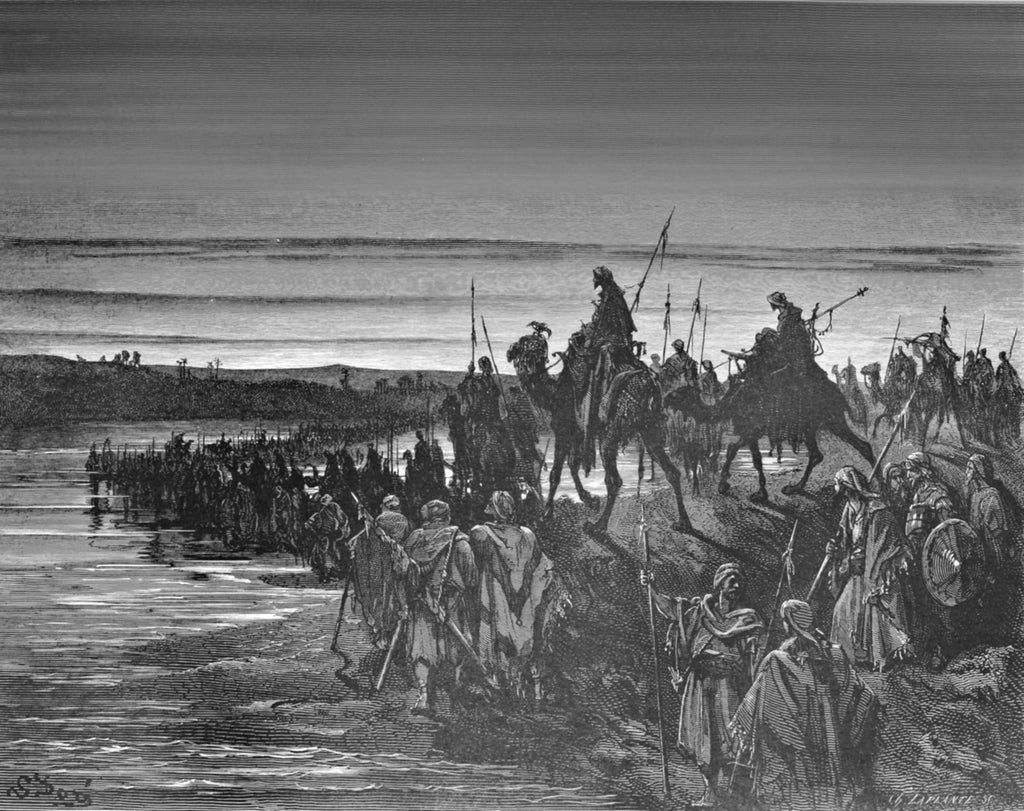
Cain’s city, Enoch, is the centre of human culture. We find the beginnings of music making and of technology (Gen 4:17-22). Clearly, these creative activities can, and do, exist in a completely secular context. But the secular city as the home of people becomes Babel and then Babylon. How does Babylon differ from the other great biblical city, Jerusalem? The two cities come to symbolize the godless kingdoms of the world that oppose God, and the kingdom of God. So, how do they differ? The obvious contrast is between the world-view of paganism and godlessness and that of God’s election of Jerusalem to be the place where he dwells with his people. Jerusalem was a pagan city of the Jebusites until David captured it and brought God’s ark into it (2 Sam 5:7-10; 6:1-15). The ark, the Davidic covenant, and Solomon’s temple are what make the transformation. This once pagan city, however, even after the Davidic transformation, can become the city of idolatry, the city that kills the prophets, and which itself is only transitory. But it foreshadows the heavenly Jerusalem that is the home to which the risen Christ goes and that is the home of all Christ’s redeemed people.
Paul’s bifurcation of Jerusalem into the one representing slavery and the ‘Jerusalem above’ (Gal 4:21-31) represents the hermeneutic schism between the unbelieving Judaism and the messianic Jewry who formed the beginnings of the Christian church. The former continues as a perpetual diaspora of Jews throughout the ages, that finds a resolution to its search for a Jewish homeland in the realization of the Zionist dream in 1948 with the foundation of the State of Israel. In my opinion, contemporary Christian Zionists make a disastrous miscalculation when they bypass the New Testament evidence that points us to the heavenly Jerusalem to which Jesus has ascended and made the way ‘through the veil’ to go home.
There is the moral dimension of the hatred of God and the sense of human autonomy in the godless centres. In this world the redeemed of God are sojourners and pilgrims who are essentially misfits in the context of godless societies. That the contrast involves the moral revolt of the world against its Creator is clear from the way the story ends. There can be no heaven without hell, no final blessings without judgment and perdition. Those who die ‘in the Lord’ are blessed because they rest from their labours (Rev 14:13).
Home to rest
Other themes link with this notion of the final goal, the home of God’s people. One is the Sabbath rest. Psalm 95, picked up in the New Testament book of Hebrews, makes it clear that the Sabbath Rest is found in the Promised Land, that is, in the new Eden where God and his people dwell together: ‘There remains a Sabbath rest for the people of God, for whoever has entered God’s rest has also rested from his works as God did from his’ (Heb 4:9). This is more than mere analogy, for the Sabbath rest in Israel was part of the pedagogy of the law until Christ should come (Gal 4:1-4).

The negation of rest is exile. Exile is an ever-present theme that has its beginnings with the ejection from Eden. The captivity in Egypt is not finally resolved by the nation of Israel in Canaan. Its transient nature demonstrates that the nation at home is still in exile and will be until the great prophecies of restoration and redemption are realized. The exile in Babylon was not resolved by the return in 538BC, as subsequent history shows. And the early church had to realize that to be in this alien world is to be still in exile. So Peter, possibly writing to a Jewish church, addresses them as ‘elect exiles’ (1 Pet 1:1). Again, ‘I urge you as sojourners and exiles to abstain from the passions of the flesh which wage war against your soul’ (1 Pet 2:11). They are in an alien context ‘among the Gentiles’ (v12). Clearly, they are not home.
* * *
We have only scratched the surface in this short article. The idea of home links with so many biblical themes that are part of the revelation of God and his kingdom. The bottom line is surely that home is defined by God and his purposes for his creation and, above all, for humanity. Apart from God we are homeless, wanderers, sojourners, and devoid of real rest and fulfilment. Our earthly homes are at best only temporary shadows of eternity in the presence of God. Christ came to suffer the ultimate homelessness for us that he might lead us to our permanent home with him. The Christian instinct of the great hymns is well grounded. The typology of crossing the last river, Jordan, into the Promised Land, providing the image of death that leads to resurrection and eternity with Christ in his kingdom is biblically sound.
My Father’s house on high,
Home of my soul, how near
At times to faith’s foreseeing eye
Thy golden gates appear!
Ah! then my spirit faints
To reach the land I love,
The bright inheritance of saints,
Jerusalem above.[2]
When I tread the verge of Jordan, bid my anxious fears subside;
Death of death and hell's destruction, land me safe on Canaan's side.
Songs of praises, songs of praises, I will ever give to thee;
I will ever give to thee.[3]
Graeme Goldsworthy, now retired, was for many years a lecturer in biblical theology, Old Testament, and hermeneutics at Moore Theological College in Sydney, Australia.
__________________________________________________
[1] James Montgomery, 1835.
[2] James Montgomery, ‘Forever with the Lord’ verse 3.
[3] William Williams, ‘Guide me o thou great Jehovah’ verse 4, 1745.
Leave a comment
Comments will be approved before showing up.
Also in CASE Online Library


Sign up to get the latest on sales, new releases and more …
© 2026 CASE.
Designed by Out of the Sandbox.
Powered by Shopify


